Watercolor Clipart: Back to School PNG Collection
When you are building a visual identity for an educational brand or a back-to-school campaign, relying solely on standard sans serif font typography often falls short of capturing the warmth of a classroom environment. True brand identity requires texture and personality. This is where high-quality design assets become essential. Specifically, utilizing Watercolor Clipart. Back to School PNG elements offers a way to inject hand-drawn charm into your projects without the cost of commissioning original paintings. These assets serve as a visual bridge between professional graphic design and the organic feel of childhood education.
Visual Characteristics and Style
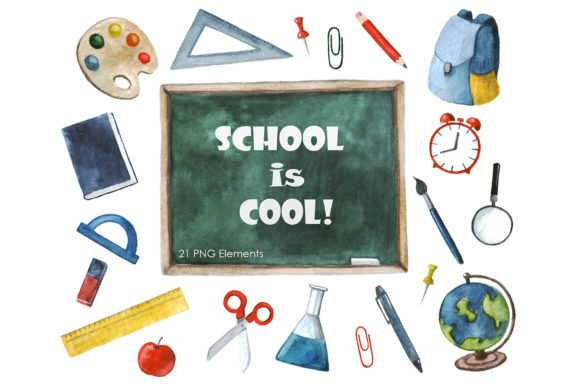
The defining trait of this specific collection is its authentic, hand-painted aesthetic. We are not looking at flat vectors or generic stock imagery; this is watercolor clipart that mimics the bleed and saturation of real pigment on paper. The style is illustrative and whimsical, featuring a distinct "doodle" quality that feels personal and approachable. Because the items are isolated on a transparent background, they function as modular components. You can layer them over busy textures or solid colors without worrying about clashing white boxes. The visual weight of these assets is soft, allowing them to complement rather than overpower text elements in your layout.
Practical Applications for Modern Creators
Understanding how to deploy these assets across different mediums is key to maximizing their value. This collection is versatile enough to span digital interfaces and physical merchandise. Here is how different professionals can leverage this set:
- Editorial Design and Publishing: Use the backpack or apple icons as spot illustrations in newsletters or blog headers to break up long blocks of text.
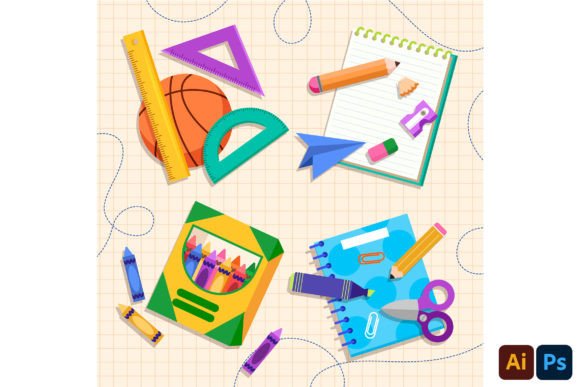
- Packaging Design: Incorporate the scissors and ruler elements into hang-tags for handmade goods sold at back-to-school markets.
- Social Media Graphics: Create cohesive Instagram stories or Pinterest pins using the alarm clock and paper clips to signify time management or organization tips.
- Scrapbooking: The watercolor hand drawn nature of the elements makes them perfect for digital scrapbooking templates.
- Web Design: Use these as decorative accents on educational websites or e-commerce stores selling stationery.
Integrating Clipart with Typography
One of the most common questions regarding design assets is how they interact with typefaces. When you pair this watercolor clipart with typography, contrast is your friend. Because the illustrations are organic and irregular, they pair exceptionally well with clean, geometric fonts. A bold modern typography style or a structured sans serif font provides the necessary stability to balance the fluidity of the watercolor paint.
Conversely, mixing these illustrations with a complex script font or a decorative handwritten font can create visual chaos unless handled with extreme care. If you are creating a logo design, consider using the clipart as a secondary element—perhaps framing a monogram—rather than weaving it directly into the letterforms. For commercial font users, ensure that the license of your chosen typeface allows for embedding within merchandise if you plan to sell physical items featuring these designs.
Evaluating Project Fit and File Specifications
Before integrating these assets into your workflow, it is vital to assess the technical specifications. The collection provides 21 PNG elements at 300 DPI. This resolution is standard for print quality, ensuring that the edges of the watercolor strokes remain crisp even when scaled. However, because these are raster files (pixels) rather than vector files, there are limits to how much you can enlarge them before losing clarity.
The file dimensions provided—specifically 2.7 inches by 2 inches for some elements—suggest these are designed as embellishments rather than full-page backgrounds. This is a crucial distinction for editorial design and layout planning. You would not use these as a background texture for a poster; rather, you would use them as focal points or accents within a larger composition.
Checklist for Usage
- Resolution Check: Verify that your final output resolution matches the 300 DPI quality of the assets.
- Color Harmony: Ensure the watercolor palette (usually soft pastels or primary school colors) matches your project's color scheme.
- Layering: Test the transparency. Since these are PNGs, layering them over images works best if the underlying image isn't too visually "loud."
- Scalability: Do not upscale these images significantly. If you need a larger size, keep the original aspect ratio to prevent pixelation.
Commercial Use and Strategic Branding
For entrepreneurs and small business owners, the utility of Watercolor Clipart. Back to School PNG extends into product creation. If you run a print-on-demand business, these assets can be used to create unique postcards, t-shirts, tote bags, and posters. The "doodle" style appeals to a wide demographic, particularly parents and teachers looking for relatable, cheerful imagery.
When using these for brand identity, consistency is paramount. Select two or three elements from the set to act as your signature motifs. For example, if you are a tutor, consistently using the globe and the book in your social media graphics creates a recognizable pattern for your audience. This repetition builds trust and professionalism. It moves the clipart from being a random decoration to a strategic component of your visual language.
Technical Workflow and Software Integration
Since the deliverable is a ZIP file containing individual PNGs, the workflow is straightforward for most creators. You do not need advanced skills in graphic design software to use them effectively. They can be dragged and dropped into:
- Canva: Ideal for marketers and bloggers creating quick social posts.
- Adobe Photoshop: Best for complex compositing and photo manipulation.
- Procreate: Excellent for iPad users adding these elements to digital planners.
- Affinity Publisher: Useful for print layout and packaging design.
The transparency of the PNG format means you do not need to perform complex masking or background removal. This saves significant time in the production phase, allowing you to focus on composition and storytelling rather than technical file preparation.
Final Thoughts on Asset Selection
Choosing the right design assets often comes down to versatility. A set of school-themed illustrations might seem niche, but the individual elements—scissors, globes, paper clips—have broad applications in productivity, organization, and education niches. By treating these watercolor elements as professional tools rather than simple decorations, you can elevate the production value of your projects. Whether you are designing a flyer for a local school event or branding a stationery line, this collection provides a solid foundation of high-quality, stylistically cohesive imagery.